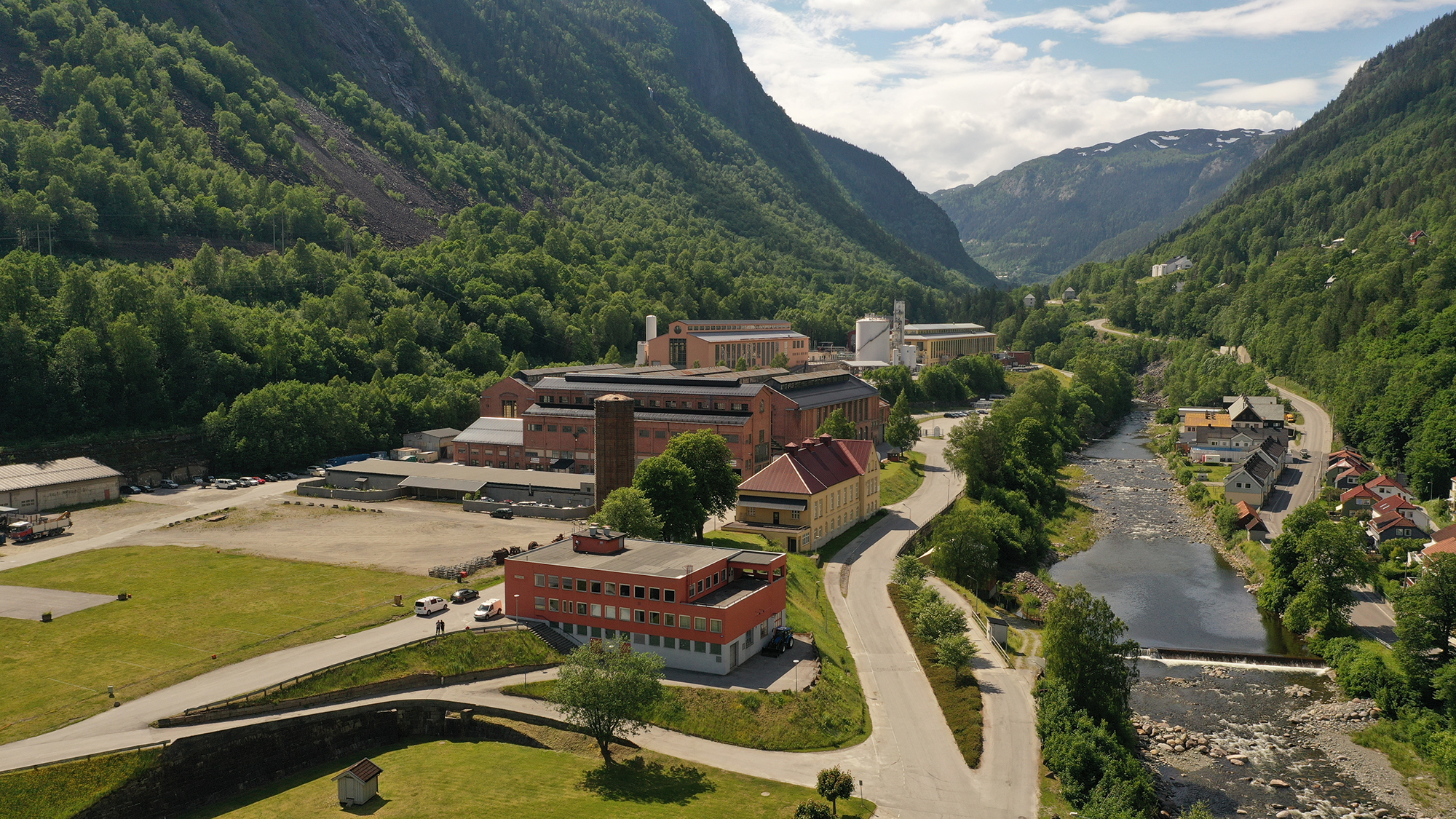
Green future industry in Rjukan
Rjukan could become a showcase for industrial symbiosis, where one business's emissions and waste become input materials for another.
Algaecould become green future industry in Rjukan
A groundbreaking project in Rjukan is exploring how algae can create new value by utilizing local surplus resources. Sirkulære Rjukan is leading the work together with AlgeNatura AS, the University of South-Eastern Norway and Rjukan Business Development, with support from Telemark County Council.
The project aims to transform what was previously waste into valuable raw materials through algae production. Carbon dioxide from aquaculture facilities and surplus heat from industry can be used as inputs to cultivate algae as an alternative to imported feed ingredients. This reduces both the climate footprint and the need for imports from South America.
Algae can be grown industrially using light, CO₂, nutrients and water, resulting in protein-rich biomass suitable as fish- and animal feed. The project supports the government's goal of increased Norwegian feed production and could create local jobs, thereby supporting AlgeNatura's vision of sustainable feed production.
The initiators hope Rjukan can become a showcase for industrial symbiosis, where one business's emissions become input for another - a concept that could be replicated elsewhere with similar conditions.
Source: Sirkulære Rjukan